Getting Started with an Airbrush for Miniatures
Published How we research
An airbrush is the most misunderstood purchase in miniature painting. It will not paint your models for you, and it will not instantly make you better. What it does is lay perfectly smooth coats of thin paint at any scale, from priming a tank in ninety seconds to fading a gradient across a sword blade. For base coating, priming, varnishing, zenithal highlights, and large-surface blends, it does in minutes what brushes do in hours. The cost is a new set of skills: thinning, pressure control, and above all cleaning.
Products from this article
The highest-scoring picks from the buying guides this article links to. Scores are our editorial assessment, not customer ratings.
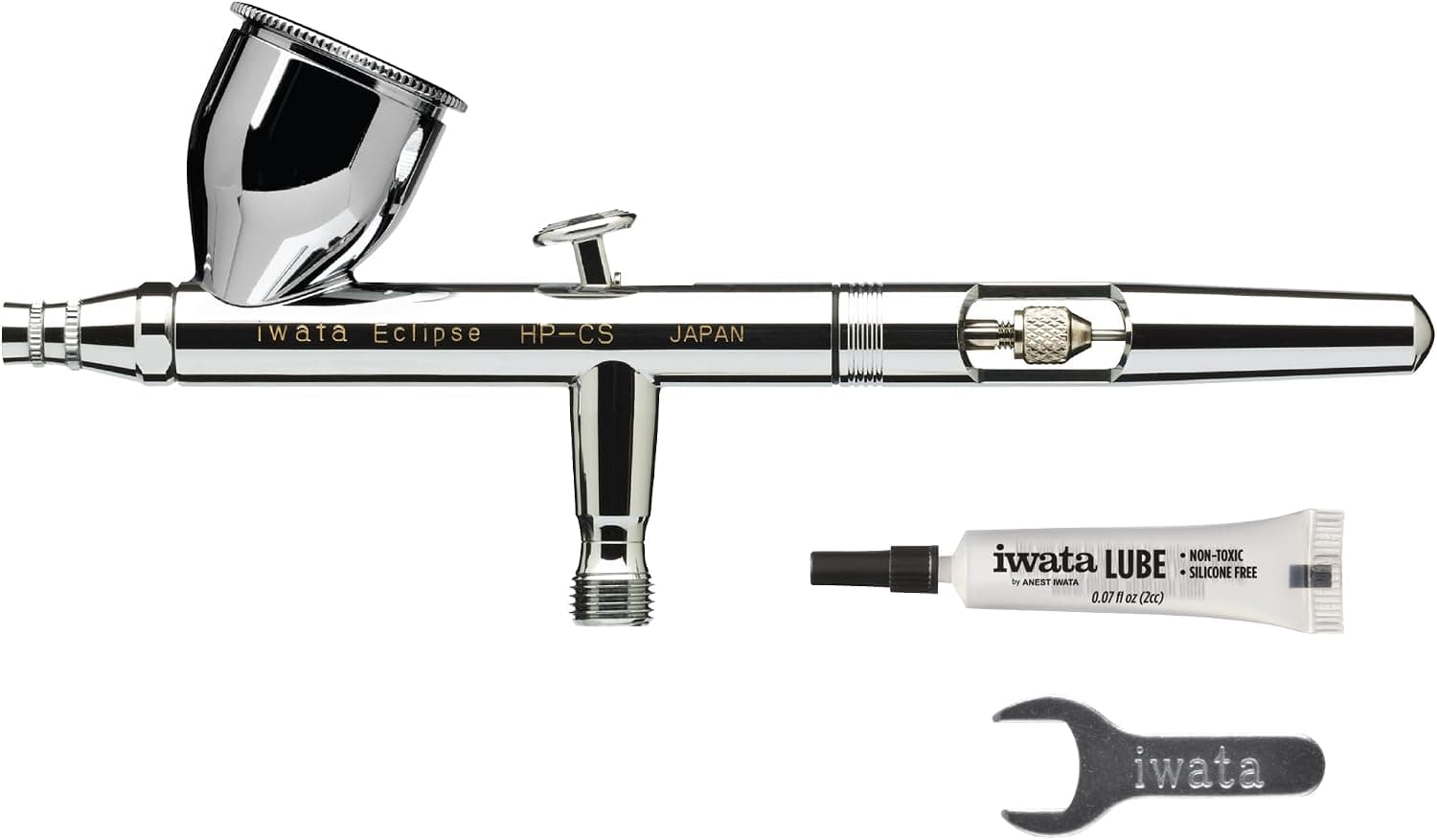
+ Handles fine detail through wide coverage, ideal for minis and vehicles
From our guide: Best Airbrushes for Painting Miniatures
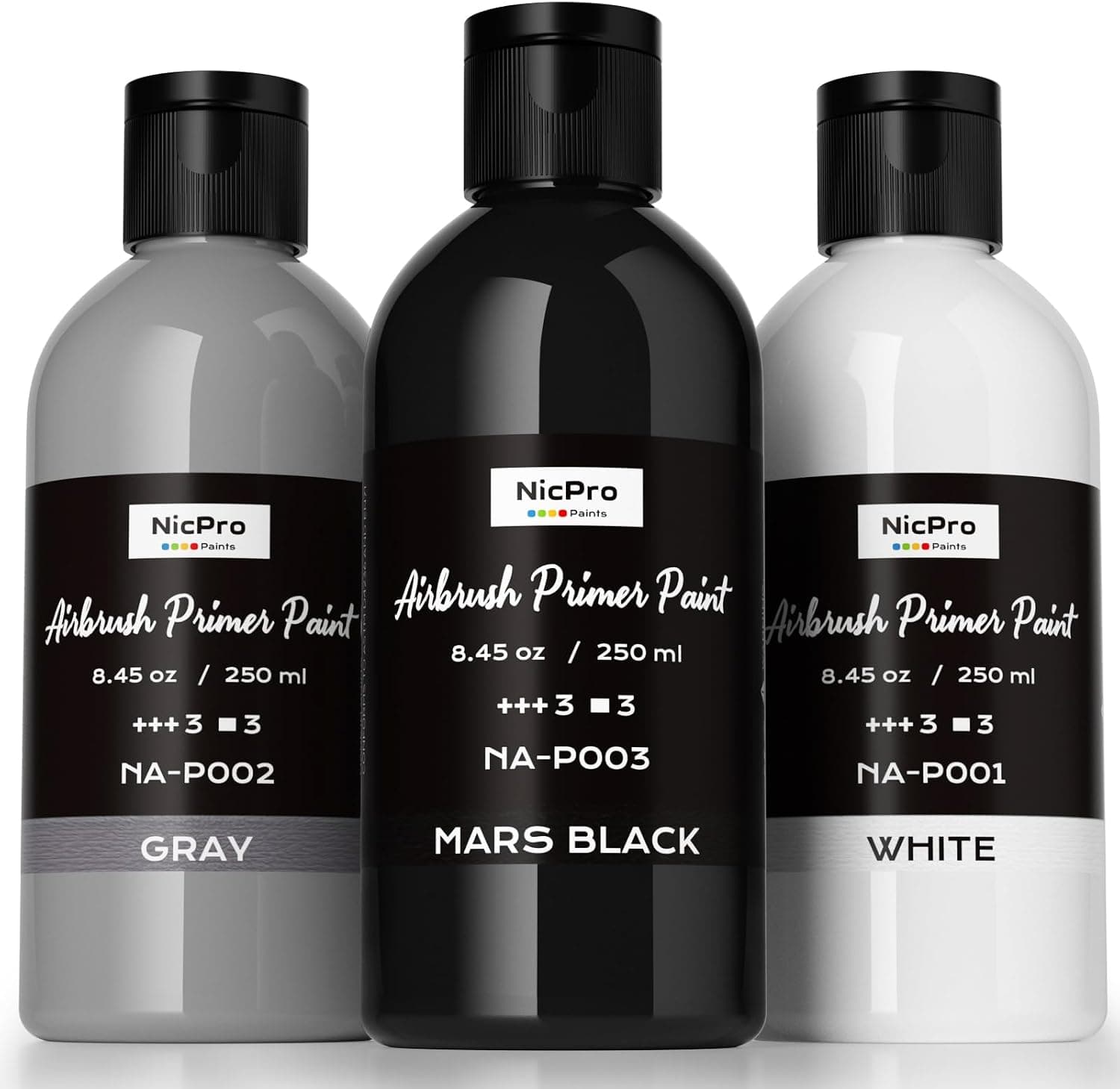
+ Black, gray and white allow zenithal priming in one purchase
From our guide: Best Airbrush Primers for Miniatures
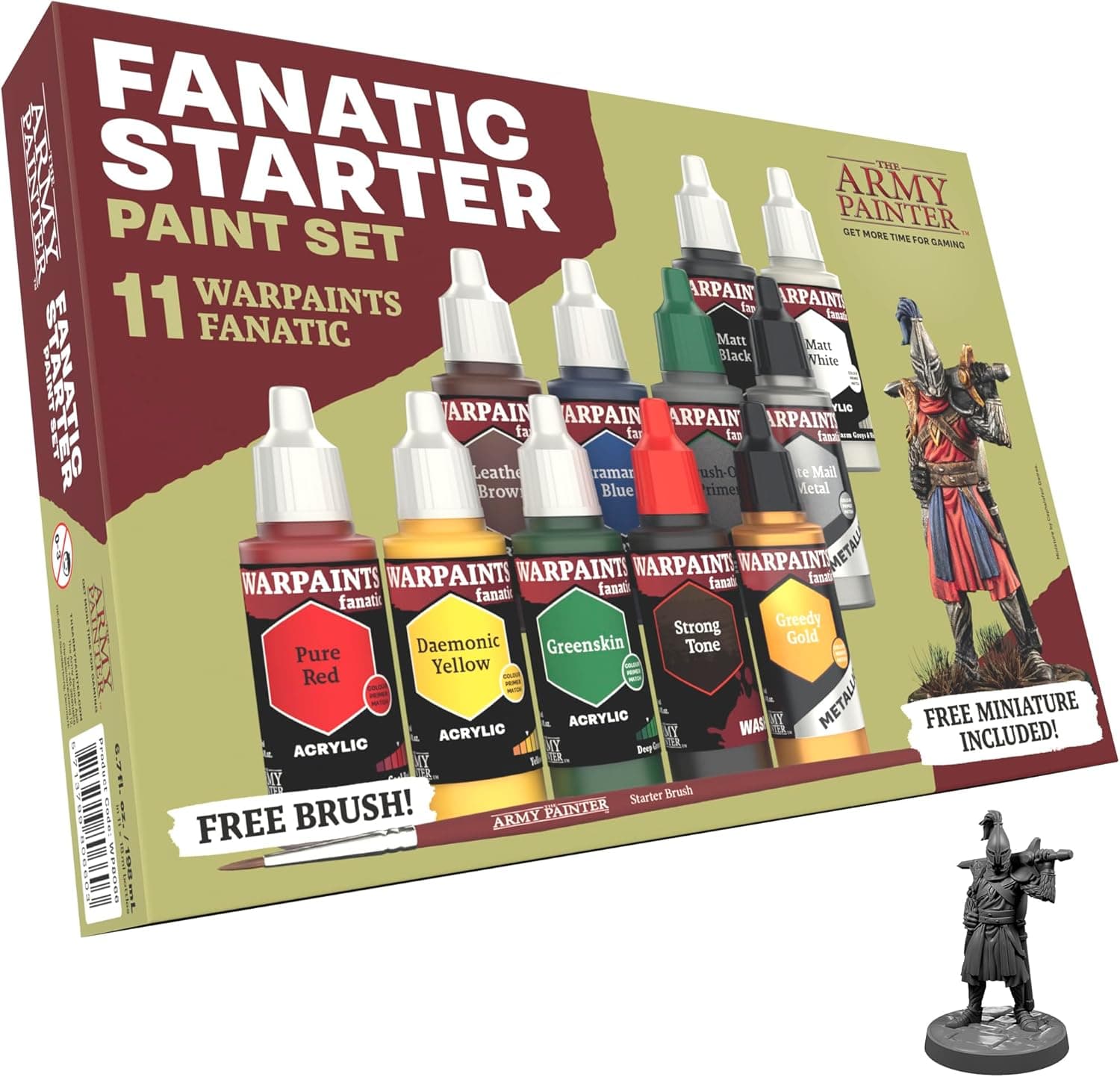
+ Includes primer, wash and metallics, so the full base-shade-highlight workflow is covered
From our guide: Best Starter Gear for Miniature Painting
+ Two cup sizes suit small touch-ups and larger basecoats
From our guide: Best Airbrushes for Painting Miniatures
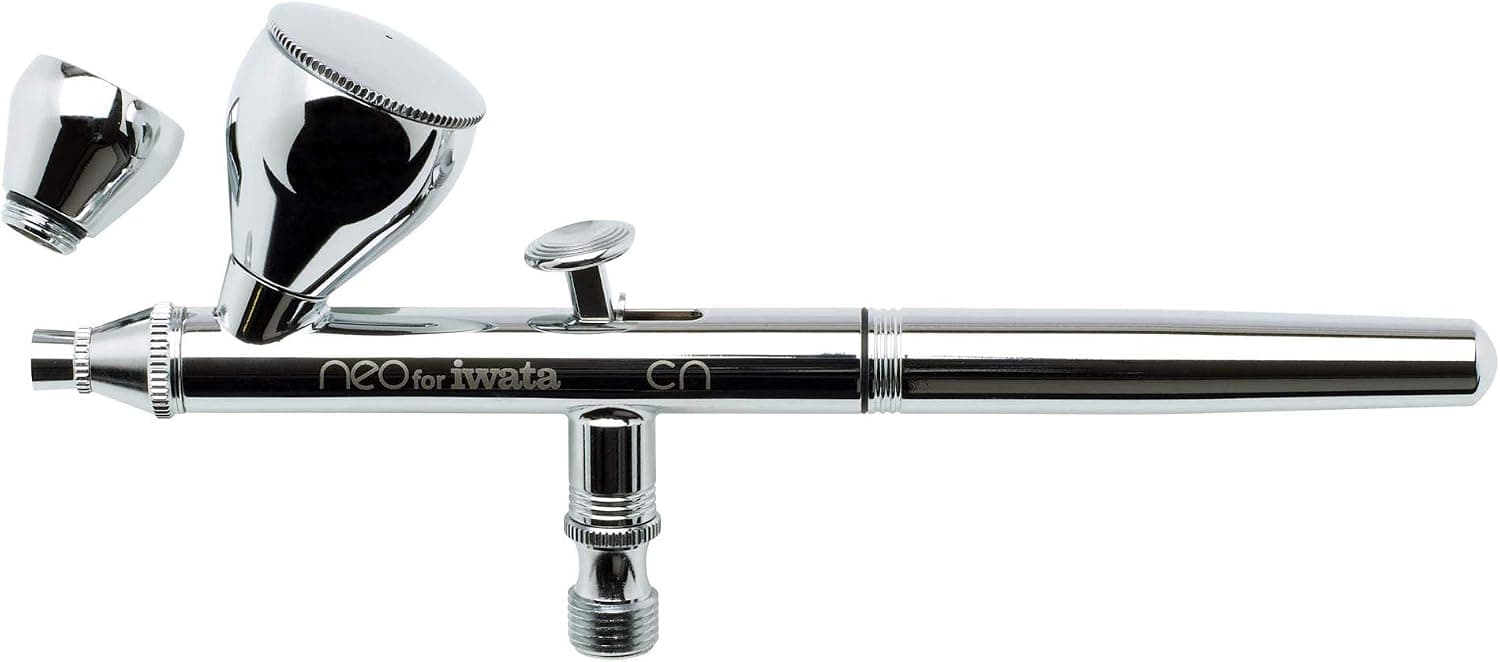
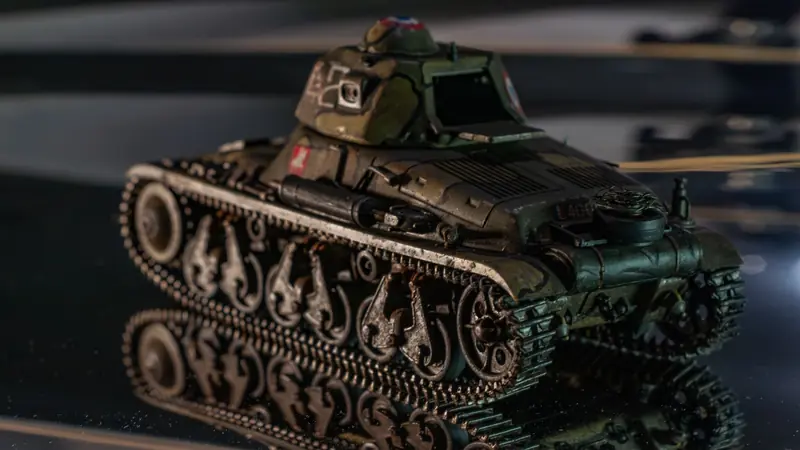
Sensible starter hardware is cheaper than the horror stories suggest. A dual-action, gravity-feed airbrush with a 0.3 or 0.35 millimeter needle covers almost everything miniature painters do; dual-action means the trigger controls air and paint separately, which you want from day one. Pair it with a compressor that has a tank and a regulator, because the tank smooths pulses and the regulator lets you work at the 15 to 25 psi range where most miniature paint sprays happily. Famous-brand needles and no-name compressors coexist fine.
Paint preparation makes or breaks every session. Airbrush-ready paints exist, but ordinary hobby acrylics work when thinned with airbrush thinner to roughly the consistency of skimmed milk. Too thick and the brush sputters or clogs mid-pass; too thin and paint spiders across the surface in wet webs. Start around one to one paint and thinner, spray a test on paper, and adjust. Lower pressure with thinner paint gives finer lines; higher pressure with slightly thicker paint covers faster. These two dials, thinning and pressure, are the entire craft in miniature.
Cleaning is the tax you pay for the smooth coats, and resenting it leads to abandoned airbrushes. Between colors, a quick flush: spray out the remaining paint, rinse the cup with water or cleaner, spray until clear. At session end, a proper clean: cleaner through the brush, nozzle and needle wiped, no paint left to cure inside. A deep strip-down only occasionally. Ten disciplined minutes at the end of each session keeps the tool working for years, while one skipped cleanup can mean an hour of picking dried acrylic out of a nozzle.
Your first exercises should be cheap and unglamorous. Prime a batch of models and appreciate the even coat. Do zenithal highlights over dark primer, which is both genuinely useful and excellent trigger practice. Base coat a vehicle in thin passes, watching how color builds gradually without brush marks. On paper, practice lines, dots, and fades at different distances and pressures. Only after these feel boring should you attempt the showpiece tricks, color modulation on armor panels or glowing effects, which are the same skills applied with more patience.
Know what stays brushwork. Edge highlights, details, eyes, freehand insignia, washes in recesses, and most of the actual character of a model still come from bristles. The airbrush handles the first third of a paint job, the smooth foundation, and hands the model back. Painters who understand that division get enormous value from even a modest setup; painters expecting a magic finishing tool sell theirs within a year. Buy it for the boring jobs it does brilliantly, and let the exciting uses arrive with practice.
Popular right now
- The Best Miniature Carrying Cases for TransportBuying guide
- Best Texture Paints for Basing MiniaturesBuying guide
- Best Drybrushes for Miniatures and TerrainBuying guide
- The Best Magnifiers for Miniature PaintingBuying guide
- Best Miniature Paint Sets for Tabletop PaintersBuying guide
- Best Speed Paints for Fast Miniature PaintingBuying guide
Based on the last 28 days of search and visitor data.