Tamiya 87038 Extra Thin Cement Glue Fine Tip 40ml Review (2026)
Updated September 14, 2026 · Research-based review
Our verdict
Tamiya Extra Thin Cement is a capillary style glue that wicks into pressed together plastic joints and welds them into a strong, nearly invisible seam. The fine brush tip gives precise control for small model parts, but it only bonds polystyrene plastic and evaporates fast enough that the cap needs closing right after each use.
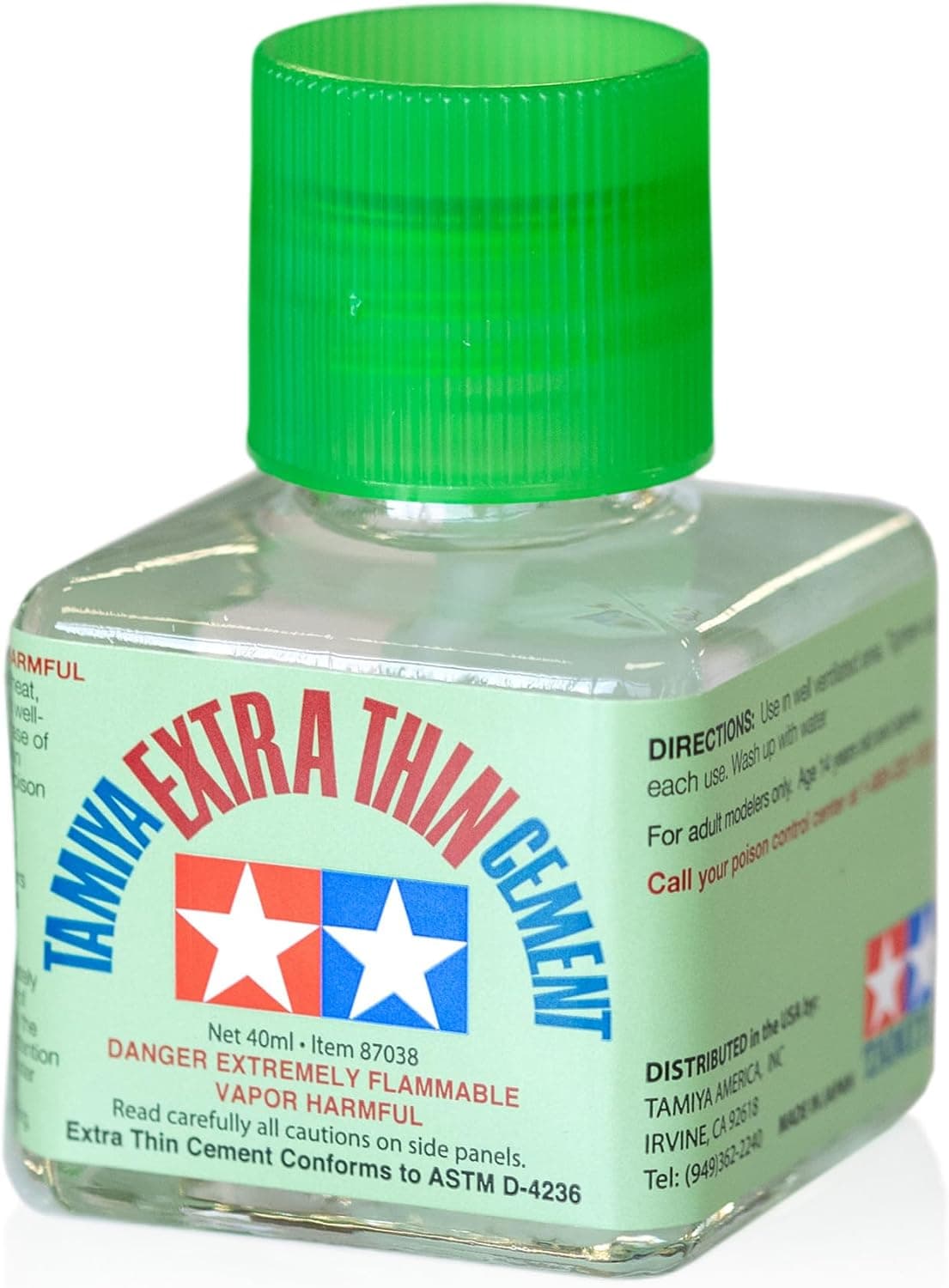
Tamiya 87038 Extra Thin Cement glue with a fine tip brush in a 40ml bottle, a capillary plastic cement for model kits.
Price range: See on Amazon
What we liked
- + Extra thin glue wicks into joints for clean, invisible seams
- + Welds polystyrene plastic for very strong bonds
- + Brush applicator puts glue exactly where you need it
Trade-offs
- - Works only on polystyrene plastic, not resin or metal
- - Fast evaporation means caps must be closed quickly
Who this glue is built for
This cement is aimed squarely at builders working with polystyrene plastic model kits, the material used in most mainstream scale models, plastic Warhammer and similar tabletop miniatures, and hobby kits generally. Unlike thicker tube glues that fill gaps as they bond, extra thin cement works by capillary action, meaning it is applied to parts already pressed together so the thin liquid can wick into the seam and chemically weld the plastic rather than gluing on top of it. A modeler working primarily with resin, metal or a mix of materials will find this glue does little for those surfaces, since its chemistry is built specifically to melt and fuse polystyrene. For anyone building or converting plastic kits regularly, though, the precise application and strong, nearly invisible joints this cement produces are hard to match with thicker adhesives.
How the fine tip applicator works
The bottle uses a brush style fine tip applicator built into the cap, letting the glue be painted directly along a seam line rather than squeezed or dripped from a nozzle, which gives far more control over exactly where the liquid goes. Because the cement is genuinely thin, a small amount goes a long way, wicking into a pressed together joint along its full length rather than pooling in one spot the way a thicker glue might. This precision matters most on small parts, fine details and tight seams where excess glue would otherwise squeeze out and mar the surface or fill in detail that needs to stay crisp. The 40 mL bottle size keeps the glue in an easily managed quantity for a hobby desk, refillable brush tip bottles like this being the standard format Tamiya sells this cement in.
Using it and keeping the bottle usable over time
The typical process is to dry fit and hold two plastic parts together, then touch the wet brush tip to the seam so the thin liquid draws in along the joint by capillary action, welding the plastic together as the solvent evaporates. Average drying time before you can move on to the next assembly step runs around 5 to 10 minutes, with a full cure taking about 24 hours before the joint reaches its final strength, so parts under stress should be supported or held in position rather than immediately handled roughly. Because the formula is genuinely thin and evaporates quickly, leaving the cap open even briefly between uses lets the bottle dry out or thicken over time, so closing it promptly after each application keeps the cement working as intended for future projects. Good ventilation is worth keeping in mind as well, since the fast evaporating solvent carries a noticeable odor during use.
How it compares with other plastic cements
A quick setting version of the same Tamiya extra thin cement trades a little working time for faster bonding, useful when a builder wants to move through assembly steps faster and is comfortable with less time to reposition parts before the glue sets. Revell's Contacta Professional glue offers a similar capillary action formula in a smaller 25 gram container, a reasonable alternative for builders already invested in that brand's other products. A basic Humbrol plastic cement in a 24 mL tube costs less but generally applies with a less precise tip than Tamiya's brush style applicator, trading precision for a lower price point. Against these, Tamiya's standard extra thin cement remains a benchmark reference point in the hobby specifically because of its fine tip control and reliable, strong bond on plastic seams.
Verdict and when a different glue makes more sense
Buy this cement if you build or convert polystyrene plastic model kits regularly and want precise, nearly invisible seams rather than visible glue lines from a thicker adhesive. It earns our score of 8.7 out of 10, reflecting genuinely strong bonding and application control, held back only slightly by the narrow material compatibility and the need to close the cap promptly after each use. Modelers working with resin or metal miniatures should look for a cyanoacrylate super glue instead, since this cement's chemistry does not bond those materials at all. Anyone wanting extra working time to reposition parts before the glue sets should stick with this standard formula rather than the quick setting version, which bonds faster but forgives fewer mistakes.
Frequently asked questions
Does this glue work on resin or metal miniatures?
No, this cement is formulated specifically to weld polystyrene plastic and will not effectively bond resin or metal parts, which need a cyanoacrylate super glue or epoxy instead.
How long does it take for a joint to fully cure?
Parts can usually be handled carefully after about 5 to 10 minutes, but the manufacturer states a full cure takes around 24 hours before the joint reaches its final strength.
Why does the cap need to be closed right after use?
The formula is genuinely thin and evaporates quickly, so leaving the cap open even briefly can let the cement thicken or dry out over time, shortening the bottle's usable life.
Can this glue fill gaps between poorly fitting parts?
Not effectively. It is designed for capillary action into already pressed together seams rather than gap filling, so poorly fitting parts still need trimming or filler separately.
Prices change often, so check the current price and availability on Amazon.
Check price on AmazonMini Paint Lab may earn a commission from the link above.