Tamiya 74035 Sharp Pointed Side Cutter (Sprue Cutter) Review (2026)
Updated September 20, 2026 · Research-based review
Our verdict
Tamiya's 74035 Sharp Pointed Side Cutter is built for builders who need extra-fine, close-clearance cuts on delicate parts such as fine miniature or ship model details. Its thinner, sharper-pointed blades handle tight sprue connections other cutters cannot reach, though it should stay dedicated to plastic to keep the edge sharp.
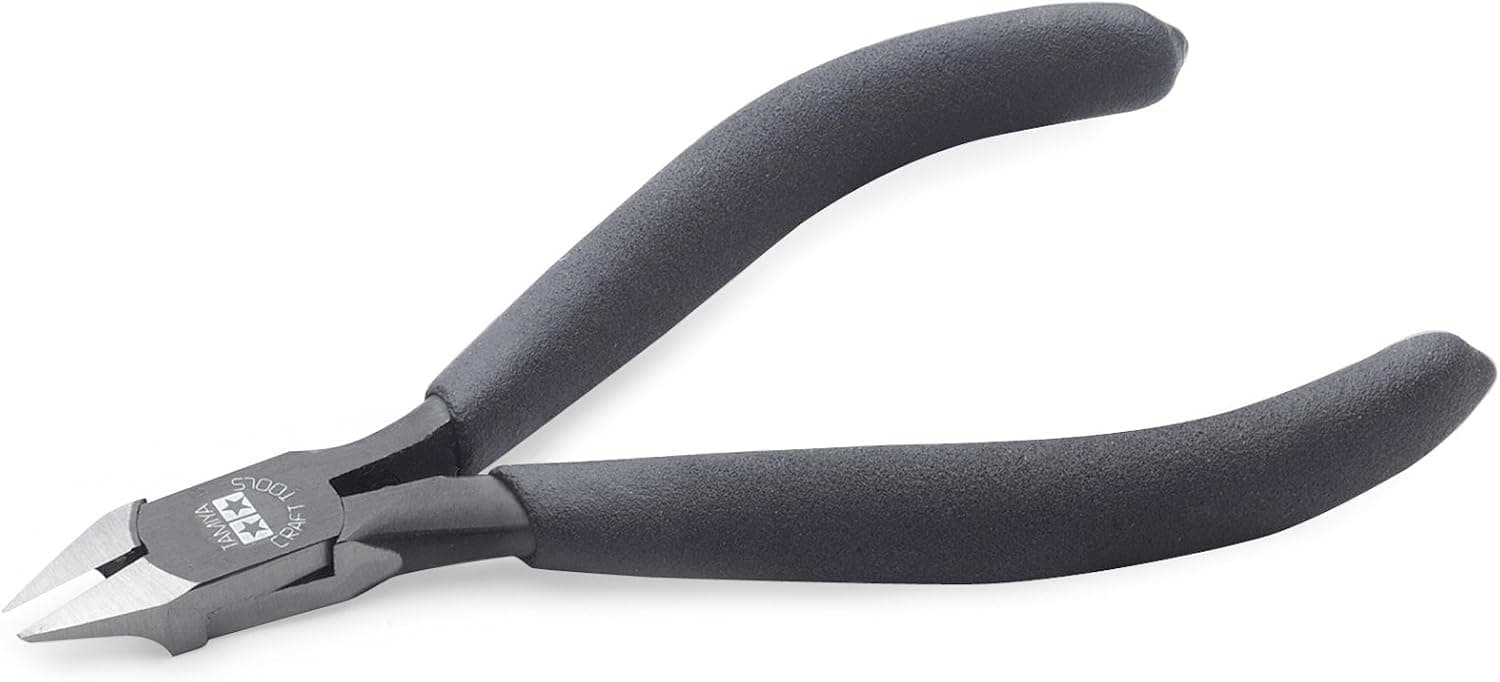
Tamiya 74035 Sharp Pointed Side Cutter, a classic sprue cutter used by model builders for everyday parts removal.
Price range: See on Amazon
What we liked
- + Classic Tamiya design balances precision with durable jaws
- + Handles most plastic miniature sprues cleanly and comfortably
- + Long-running product with consistent quality over many years
Trade-offs
- - Leaves slightly more nub than premium single blade nippers
- - Should be kept for plastic only to preserve the cutting edge
A cutter built for the finest clearances
The 74035 is Tamiya's Sharp Pointed Side Cutter for Plastic, a compact tool about 4.5 inches (11.4cm) long designed with thinner, sharper-pointed blades than the brand's standard 74001 cutter. Tamiya markets it specifically for sprues with fine parts and less clearance, citing detailed ship model components as a typical use case, which also covers the small, closely packed parts common on miniature sprues. The pointed tip lets the blade get into narrow gaps between a part and the sprue frame where a bulkier cutter simply will not fit. That narrow point profile is the whole reason to reach for this cutter over a standard-size pair, since the extra precision only pays off on the smallest, most crowded connection points.
Blade quality and finish
Like Tamiya's other side cutters, the 74035 uses chrome-vanadium alloy blades that are hand-finished for sharpness rather than a machine-stamped generic edge. This blade material is chosen for cutting tools because it resists dulling and chipping over repeated use on hard styrene plastic, which matters for a tool meant to handle dozens or hundreds of small cuts across a modeling project. The smaller size of the tool compared with Tamiya's standard cutters also makes it easier to maneuver in cramped spaces between tightly packed sprue parts. A well-finished blade edge also means less crushing or stress on delicate plastic at the cut point, which helps keep tiny miniature details intact instead of snapping under a duller blade.
Where this tool fits in a build
Because the 74035 trades overall cutting capacity for extra precision, it works best as a second, specialized cutter alongside a standard-size side cutter rather than as someone's only tool. Builders typically reach for it on the smallest, most delicate parts, such as weapon details, antenna, or thin miniature components, and switch to a larger cutter for thicker sprue connections elsewhere on the same kit. Keeping the cutter dedicated to plastic, rather than using it on metal or resin, helps preserve the fine edge that makes it useful in the first place. Rotating between a fine cutter for details and a standard cutter for the bulk of a sprue keeps both tools working within the range they were designed for, extending the life of the finer blade.
How it compares to the 74123
Tamiya's 74123 Sharp Pointed Side Cutter NO.123 is a longer tool at 115mm with slim jaws aimed at general close-clearance work, while the 74035 goes further with an even finer point built specifically for the smallest, most detail-sensitive parts. Both use the same chrome-vanadium blade material and hand-finishing, so the choice between them comes down to how fine the parts are that a builder is regularly cutting rather than a difference in blade quality. Many modelers end up owning both, using the 74035 for the finest details and a larger cutter for everything else.
Bottom line
The 74035 is a purpose-built tool for the smallest, most delicate cuts on a model or miniature sprue, and its thin, sharp-pointed blades reach clearances that standard cutters cannot manage cleanly. It is not meant to replace a general-purpose sprue cutter for everyday parts, and using it on anything but plastic risks dulling the fine edge faster than intended. For painters and builders who work on highly detailed miniatures or small scale kits, it is a worthwhile specialized addition to a modeling tool kit. Treated well and kept for plastic only, it should hold its edge across many builds.
Frequently asked questions
How long is the Tamiya 74035 cutter?
It is about 4.5 inches (11.4cm) long, a compact size built for maneuvering around small, closely packed parts.
What makes it different from a standard side cutter?
It has thinner, sharper-pointed blades than Tamiya's standard 74001 cutter, designed for sprues with fine parts and less clearance.
What blade material does it use?
Chrome-vanadium alloy blades that are hand-finished for sharpness, the same material used across Tamiya's side cutter line.
Should this cutter be used on materials other than plastic?
It is designed for plastic; using it on metal or resin can dull the fine edge that makes it useful for delicate parts.
Prices change often, so check the current price and availability on Amazon.
Check price on AmazonMini Paint Lab may earn a commission from the link above.