Precision Pin Vise Hand Drill Manual w/Micro Twist Drill Bits Set 0.5-3.0mm | Rotary Tool Craft Drill for Jewelry Making, Wood, Plastic, Resin, PCB, Miniature Review (2026)
Updated September 20, 2026 · Research-based review
Our verdict
A basic manual pin vise for anyone who needs to drill small holes in resin, plastic or wood for pinning and conversions. The wide bit range is the main draw, and the trade-off is a keyless chuck that will not match a premium tool for repeated heavy use.
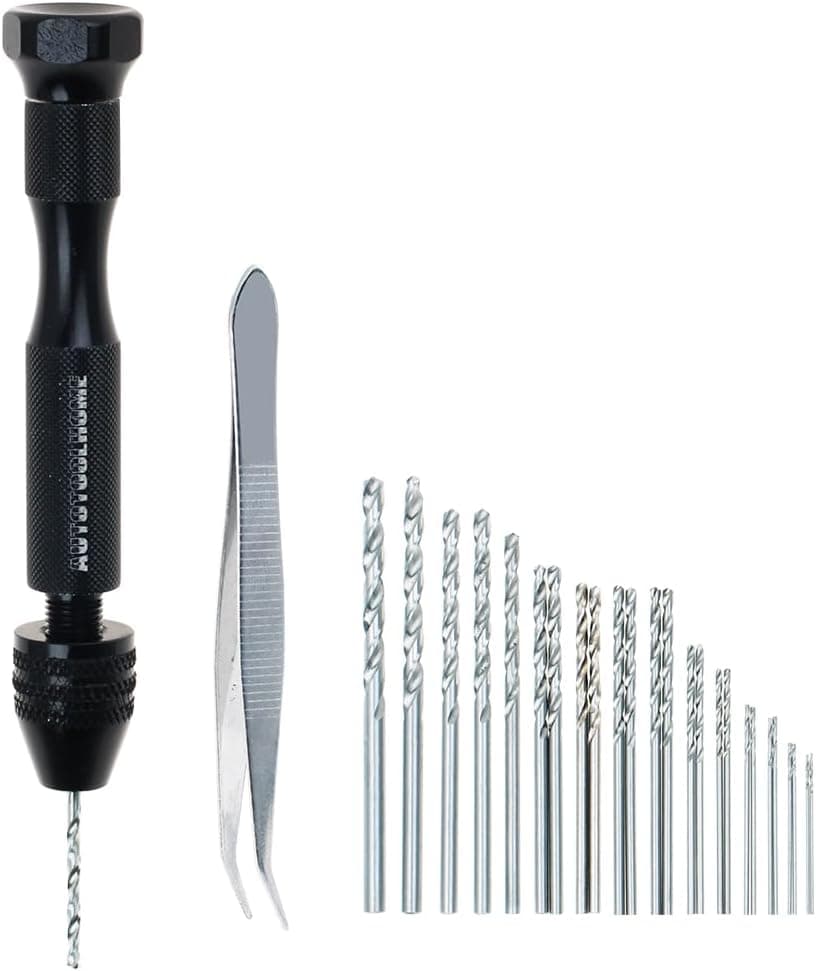
Precision pin vise hand drill with micro twist drill bits from 0.5-3.0mm, a manual drill for pinning and model work.
Price range: See on Amazon
What we liked
- + Bit range from 0.5-3.0mm covers barrel holes through pinning wire
- + Manual drilling gives slow, controlled holes in delicate parts
- + Works on plastic, resin and wood for conversions and basing
Trade-offs
- - Tiny bits snap easily if the drill is tilted while turning
- - Generic set may have a looser chuck than premium pin vises
What it is
This is a manual pin vise hand drill sold with a set of micro twist drill bits covering roughly 0.5mm up to 3.0mm, aimed at hobbyists who need to drill small, controlled holes rather than power through material fast. The body is turned by hand, which gives you direct feedback on pressure and speed, something a rotary tool cannot offer at this scale. It is marketed for jewelry making, wood, plastic, resin, PCB work and miniature hobby use, which reflects how broad the demand for this kind of tool actually is. For miniature painters specifically, the main use case is drilling pinning holes for magnets, wire supports, or replacing snapped metal parts on a model.
Key features
The set bundles the pin vise itself with a full run of bits rather than selling the handle alone, so you are not hunting for a matching bit size afterward. Listings for this model describe a keyless chuck that grips slim bits from roughly 0.3mm up to about 3.4mm, which covers everything from hairline pin holes to slightly larger magnet sockets in one tool. The handle body is described as an aluminum alloy construction, which keeps the tool light in the hand for long sessions of careful drilling. A clear storage box is included with at least one listing of this exact model, which helps keep dozens of loose micro bits from scattering across a workbench.
Build and materials
Because this is sold as a low-cost accessory rather than a specialist jeweler's tool, the finish and tolerances are what you would expect at this price: functional for hobby use, not built to a machinist standard. The bits themselves are described as HSS, the standard hardened steel used for small twist bits in craft tools, and the chuck uses a three-jaw keyless design that is turned by hand to tighten around a bit. Bits this thin are inherently fragile regardless of brand, so care in handling matters more than the specific build quality of any single set at this size.
How it compares
Against other pin vise sets aimed at the same miniature and craft market, this one sits toward the wider end of the bit range, running from about 0.5mm to 3.0mm, which covers both delicate pinning wire and larger magnet holes in a single kit. Sets built around a narrower window, such as 0.6mm to 2.5mm, may suit painters who only ever pin small parts, but they will not handle a thicker magnet without a second tool. Branded jeweler's pin vises typically cost more and may offer a tighter chuck, but for occasional hobby pinning and basing work, the wider bit spread here is the more practical trade for most painters.
Who should buy it
This suits a miniature painter or model builder who occasionally needs to drill a pinning hole, seat a magnet, or repair a snapped part, and who wants one set of bits that covers small and slightly larger holes without buying multiple tools. It is not the right pick for anyone doing frequent, repetitive drilling all day, where a sturdier jeweler's pin vise or a rotary tool with a real chuck will hold up better and feel more precise. Beginners should expect to snap a bit or two while learning to keep the tool perfectly vertical, which is normal with any micro bit set this thin, not a defect specific to this one.
Frequently asked questions
What is the smallest and largest bit size in this set?
Listings for this exact set describe bits spanning roughly 0.5mm to 3.0mm, which covers most pinning wire and magnet hole sizes used in miniature hobby work.
Can this drill through metal miniature parts?
It is designed for hand drilling in softer materials like resin, plastic, wood and thin PCB material rather than solid metal, so treat metal minis with extra caution and light pressure.
Do the bits come with a case?
At least one listing of this model includes a clear storage box for the bits, which helps keep the small sizes sorted and prevents them from getting lost.
Is a manual pin vise better than a rotary tool for pinning?
For small, precise holes in delicate resin or plastic parts, a manual pin vise gives more control over speed and pressure than a powered rotary tool, reducing the risk of blowing out the hole.
Prices change often, so check the current price and availability on Amazon.
Check price on AmazonMini Paint Lab may earn a commission from the link above.