The Army Painter, Base Primer Matt Black, 400 mL Acrylic Spray Primer, Spray Paint Basecoat for Miniature Priming Review (2026)
Updated September 21, 2026 · Research-based review
Our verdict
The Army Painter's Base Primer in Matt Black and 400 mL is a ready-to-use acrylic spray for quickly priming plastic, metal, and resin miniatures with an even matte black coat. It suits players priming squads before a game night, though a dark base makes bright colors harder to build up and weather can affect the finish outdoors.
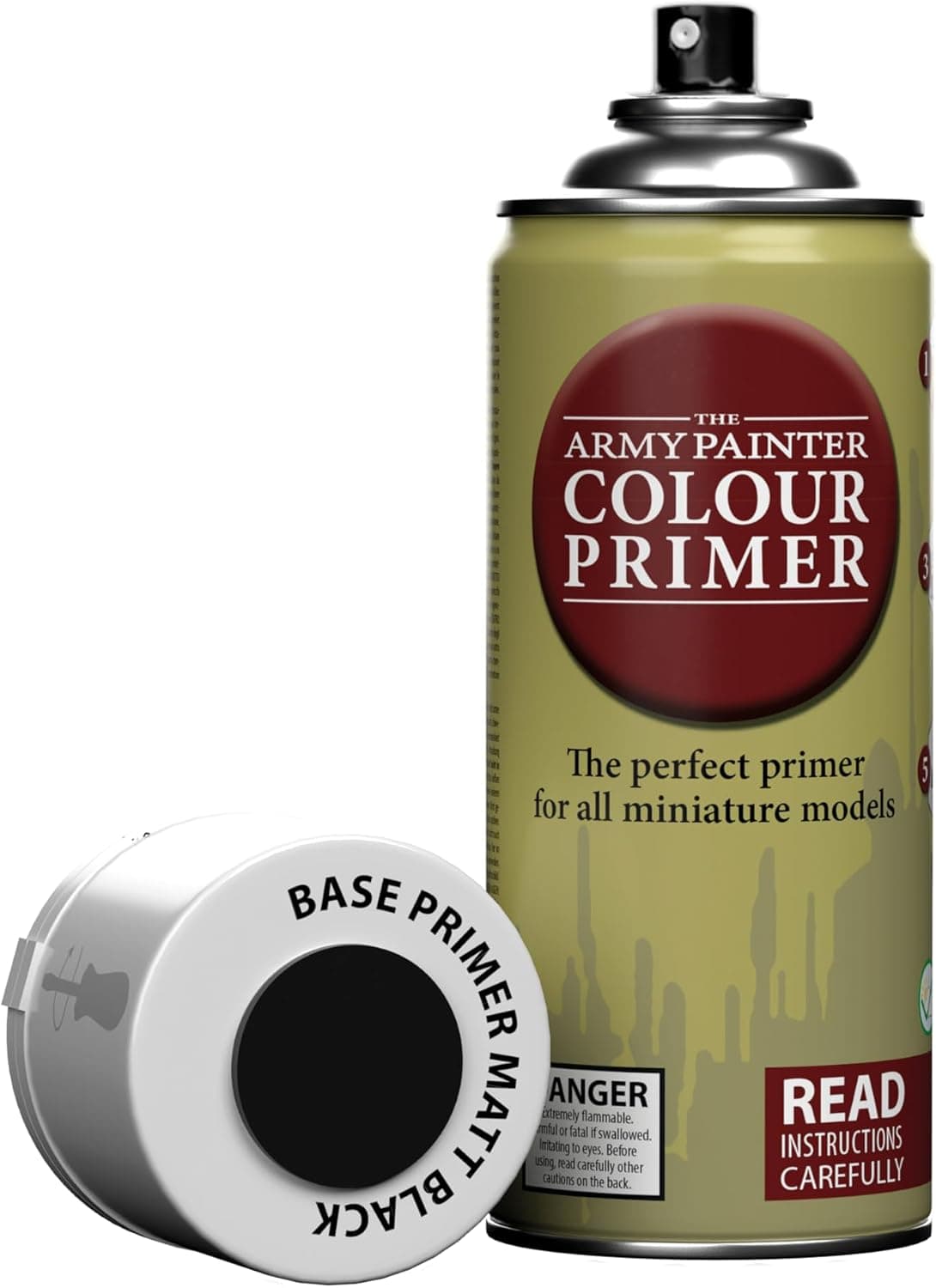
The Army Painter Base Primer Matt Black in 400 mL, an acrylic spray primer and basecoat for miniature priming.
Price range: See on Amazon
What we liked
- + Matt black spray primes squads quickly with an even coat
- + Black base helps with metallic and dark color schemes
- + 400 mL can covers many models per purchase
Trade-offs
- - Spraying in humid or cold weather can leave a grainy finish
- - Black primer makes bright colors harder to cover
What this can is designed to do
This is The Army Painter's Base Primer in Matt Black, a 400 mL (about 13.5 fl.oz.) acrylic spray can meant to prime miniatures before painting, giving them a uniform surface for base coats and washes to grip. The formula is a water-based acrylic with a precision nozzle, built to be ready-to-use straight out of the can without extra mixing or thinning. It is suitable for plastic, metal, and resin models, the three main materials used across tabletop miniature ranges, so a single can typically covers a mixed collection without needing a separate primer per material type. That range of compatibility is useful for hobbyists building armies that mix plastic kits with metal or resin character models in the same squad.
Coverage and finish
Army Painter describes the pigment in its primer sprays as very fine, aimed at giving strong coverage while still leaving sculpted detail visible rather than filling in fine lines or textures. A black base coat is a common choice among miniature painters because it naturally provides shading in recesses and along edges once color is added on top, and it forgives small gaps in coverage better than a lighter primer would. The matte finish also gives following paint layers something to grip, whether they are brushed on or applied with an airbrush, without the slickness of a glossy surface underneath, and it dries quickly enough that a primed model is usually ready for base coats the same day.
Spraying conditions matter
Like most acrylic spray primers, results depend heavily on the conditions during application: spraying in cold, humid, or damp weather can leave a grainy, uneven, or chalky finish rather than the smooth matte coat the primer is capable of producing. Painters get the most consistent results by priming in a dry, moderate-temperature environment, holding the can at a consistent distance, and applying several thin passes rather than one heavy coat that can pool in recesses or obscure fine detail. These are conditions to control for rather than flaws in the primer itself, but they matter more with spray primers than with brush-on alternatives.
Trade-offs of a black base
The main practical downside of priming black rather than grey or white is that bright, saturated colors like yellow, orange, or light blue need more coats to fully cover a dark base, since the primer color shows through thin layers of lighter paint. Painters building predominantly bright, saturated color schemes may find a white or grey primer saves time on coverage, while painters working mostly in darker, metallic, or muted schemes get more benefit from starting black. This is a workflow trade-off tied to the color scheme being painted rather than a shortcoming specific to this particular can, and many painters keep both a black and a white or grey primer on hand for different projects.
Bottom line
This is a straightforward, ready-to-use spray primer well suited to painters who want to prime a mixed collection of plastic, metal, and resin miniatures quickly before a game session or painting project, with a fine matte black finish that preserves detail. The 400 mL can covers a meaningful number of models per purchase, making it practical for regular use rather than one-off priming. The main caveats are that results depend on spraying in reasonable weather conditions, and a black base adds extra coats when building up bright color schemes on top of it.
Frequently asked questions
What size is this can and how many models does it cover?
It is a 400 mL (about 13.5 fl.oz.) spray can, which is generally enough to prime a meaningful number of standard tabletop miniatures.
Can this primer be used on resin and metal miniatures, not just plastic?
Yes, it is listed as suitable for plastic, metal, and resin surfaces.
Why would I prime black instead of white or grey?
A black base naturally shades recesses and suits darker or metallic color schemes, though it requires more coats to build up bright, light colors on top.
Does weather affect how this spray primer turns out?
Yes, spraying in cold or humid conditions can leave a grainy or uneven finish, so priming in a dry, moderate-temperature space gives the best results.
Prices change often, so check the current price and availability on Amazon.
Check price on AmazonMini Paint Lab may earn a commission from the link above.