Why Miniature Paint Dries Chalky or Grainy and How to Fix It
Smooth, even paint layers make miniatures look crisp and detailed, but paint sometimes dries chalky, grainy or dusty instead. This can happen with brand new paints and familiar favourites alike. The usual causes are over-thinning, poorly mixed pigment, old paint, rough primer or paint drying on the palette before it reaches the model. Once you know what to look for, the fix is usually simple and cheap.
Mix paints thoroughly
Pigment settles at the bottom of paint pots and dropper bottles over time, leaving thin binder at the top and a thick paste underneath. Paint that is not mixed well dries with uneven texture, weak coverage and sometimes a pale, chalky look, even when it is fresh.
Shake dropper bottles vigorously for a good while and stir pots with a mixing stick, scraping the bottom and sides. Dropping a small stainless steel agitator ball into each bottle makes mixing far more effective, especially for metallics and colours that have sat on the shelf for months.
Thin with care
Thinning paint improves flow and preserves detail, but adding a lot of plain water breaks down the acrylic binder that holds pigment particles together. Over-thinned paint can dry chalky and patchy because there is not enough binder left to form a smooth film over the surface.
Add water a drop at a time and mix thoroughly on the palette until the paint flows like milk for basecoats. For glazes and very thin layers, use an acrylic medium or glaze medium instead of only water, since it thins the colour while keeping the binder strength needed for a smooth finish.
Check your primer
Rough or fuzzy primer makes every paint layer on top look grainy, no matter how carefully you paint. Spray primer applied in humid conditions or from too far away often dries dusty, because droplets partially dry in the air before landing on the model.
Run a fingertip gently over a primed model; it should feel smooth rather than like fine sandpaper. If it feels rough, brush off loose dust with a soft brush or strip and reprime in better conditions, and consider brush-on or airbrush primer for more control over the finish.
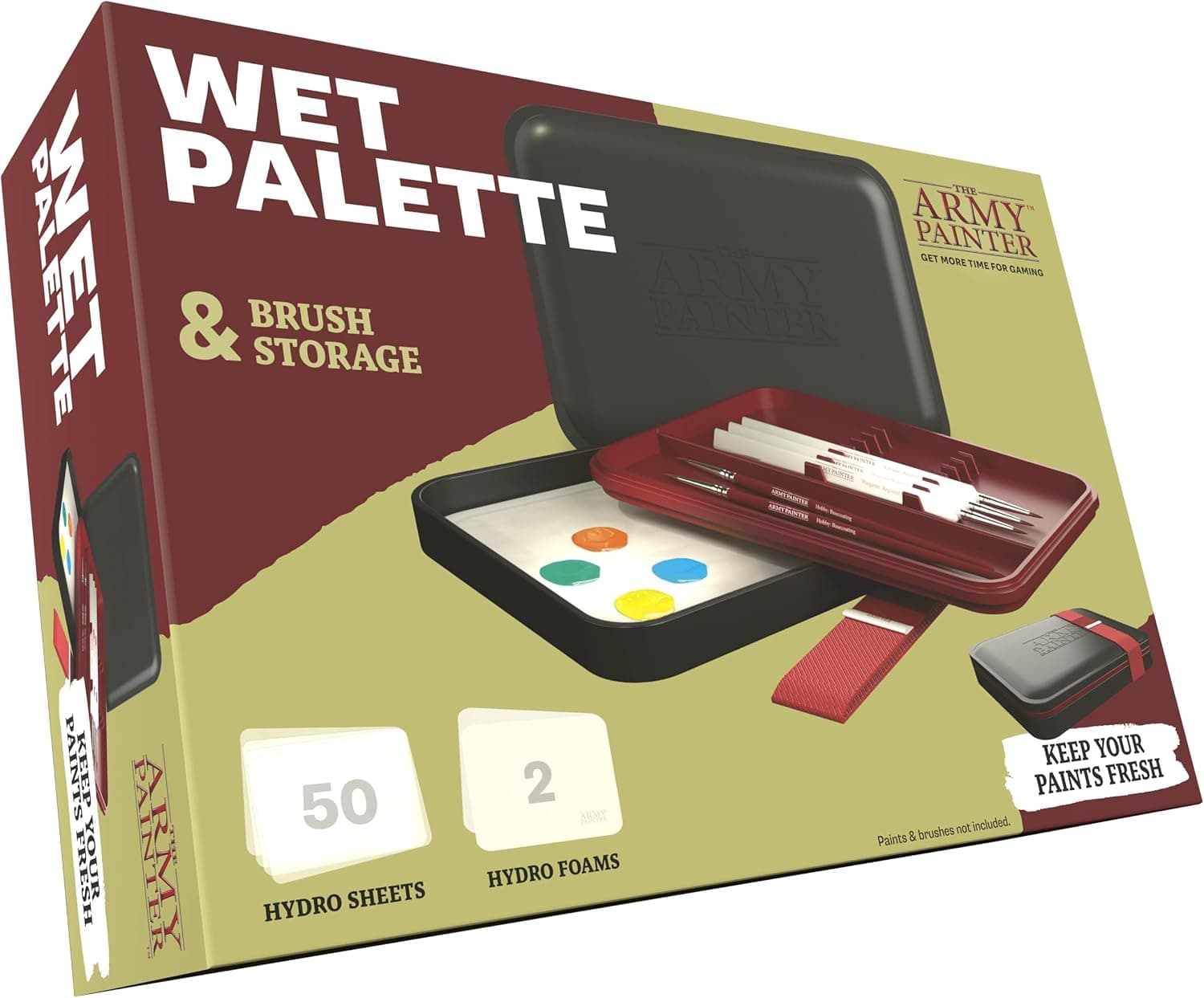
Use a wet palette
Acrylic paint starts drying within minutes on a dry palette, particularly in warm rooms or near a heater or lamp. Partially dried paint forms tiny lumps and skins that get picked up by the brush and leave a gritty texture on the miniature.
A wet palette keeps paint moist and workable for hours and maintains consistent thickness throughout a session. Replace the palette paper and water regularly, and keep the lid closed when not in use, so the sponge does not grow mould or contaminate your paints.
Watch for old or damaged paint
Paints that have partially dried in the pot, frozen during shipping or separated into stringy clumps may never return to a smooth consistency. Adding water rarely fixes paint that has already become lumpy, and it often makes the chalky finish worse.
Test a suspect paint on a spare model or plastic spoon after mixing it thoroughly. If it still dries grainy, replace it, and store paints at room temperature with lids closed tightly so they last longer.
Seal and adjust sheen
Some paints naturally dry very matte, and a very matte finish can look slightly chalky under strong hobby lamps, especially on dark colours. This is a sheen issue rather than a texture problem and is easy to fix once the model is finished.
A thin coat of satin or matte varnish evens out differences in sheen across the model and adds protection for handling. Note that some paints are designed to dry chalky on purpose, such as certain drybrushing paints, so check what a product is intended for before assuming it is faulty.