Layering vs Blending
Published How we research
Layering builds progressively lighter colours in discrete thinned steps that the eye reads as smooth at arm's length; it is predictable, repeatable across a unit, and easy to correct. Blending erases the steps for a seamless gradient using wet blending, glazing, or feathering, trading speed for a smoother finish. Layer armies and large batches, blend heroes, display pieces, and big smooth surfaces like vehicle panels and capes. Once you can base coat and wash a model, the next question is how to make surfaces look like they curve toward light, and the two classic answers are layering and blending. Layering builds up progressively lighter colors in discrete steps, like a topographic map of brightness. Blending aims to erase the steps entirely, producing a seamless gradient from shadow to highlight. They pursue the same goal by different roads, and understanding both will shape how you paint everything from cloaks to armor plates.
Products from this article
The highest-scoring picks from the buying guides this article links to. Scores are our editorial assessment, not customer ratings.
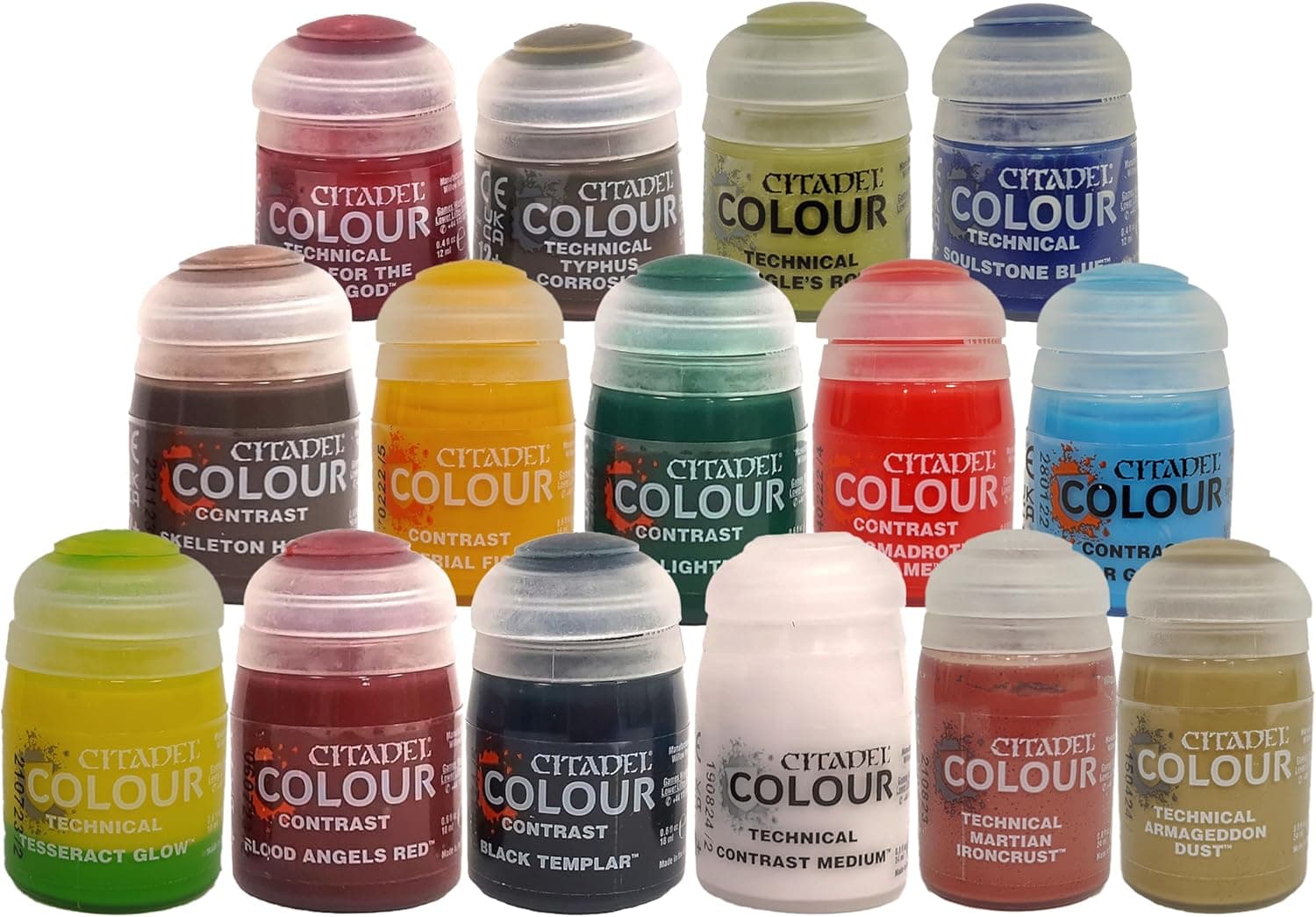
+ Mix of Contrast and Technical paints covers fast bases and texture effects
From our guide: Best Contrast Style Paints for One-Coat Miniature Painting
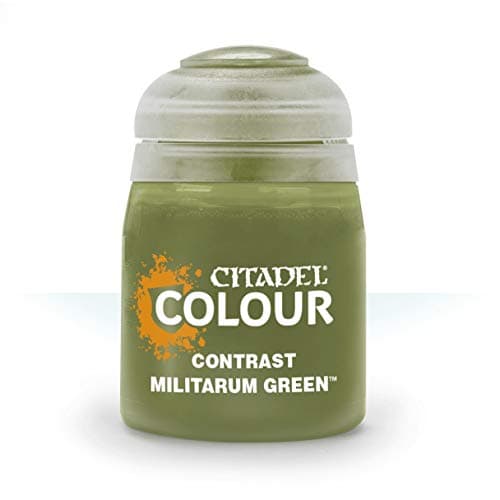
+ Bases, shades and highlights in one coat, the effect Contrast paints are known for
From our guide: Best Contrast Style Paints for One-Coat Miniature Painting
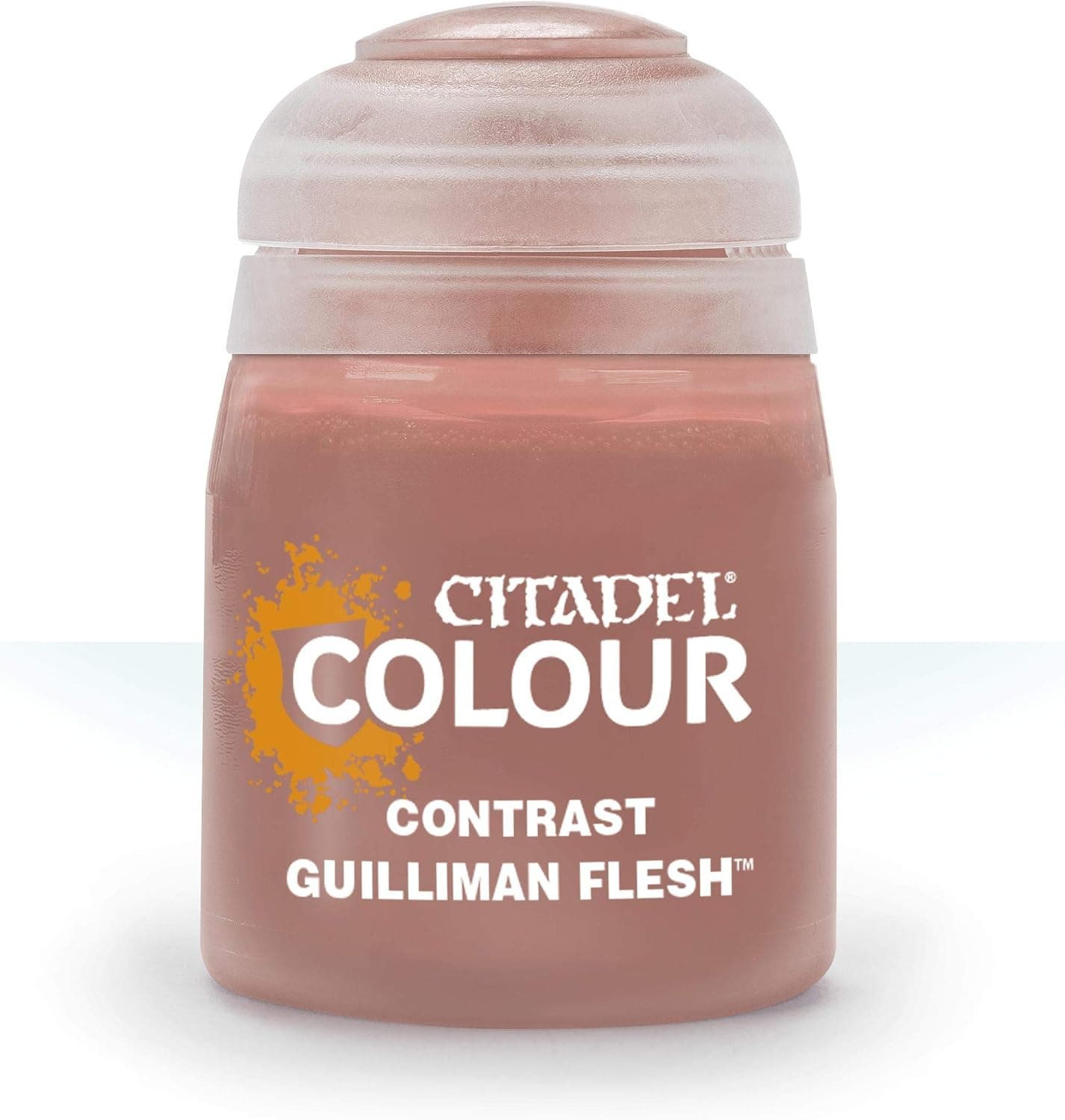
+ Warm flesh tone settles into facial detail for quick natural skin
From our guide: Best Contrast Style Paints for One-Coat Miniature Painting
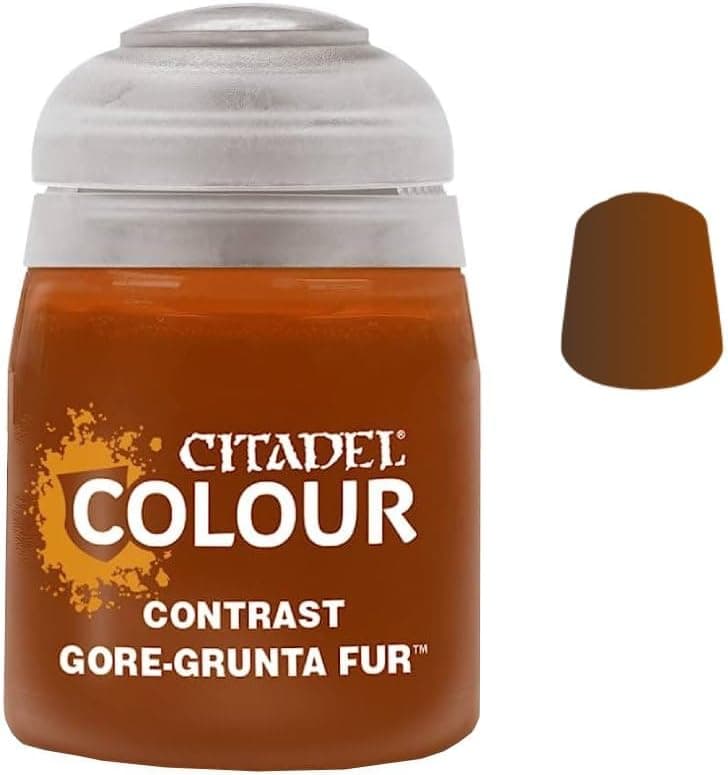
+ Brown tone flows into fur texture and leaves raised strands lighter
From our guide: Best Contrast Style Paints for One-Coat Miniature Painting
Layering: the reliable workhorse
Layering is the workhorse. You paint the whole surface in a mid-tone, then apply a lighter mix to a smaller area facing the light, then an even lighter mix to a smaller area still, perhaps three to five steps in total. Each layer is thinned so its edge is soft rather than a hard line. Done at tabletop distance, the eye reads the steps as a smooth transition. Layering is predictable, repeatable across a unit, and easy to correct, which is why army painters lean on it so heavily.
The skills inside layering: consistency and placement
The main skills inside layering are consistency and placement. Mix enough of each step so you do not have to rematch colors halfway through a squad, and keep the jumps between steps moderate; a huge leap in brightness makes the banding obvious. Placement means committing to a light direction, usually overhead, and shrinking each successive layer toward it. If the steps look too harsh when you finish, a thin glaze of the mid-tone over the transition softens everything and hides the seams.
Blending: wet blending, glazing, and feathering
Blending covers a family of techniques that remove visible steps. Wet blending mixes two colors directly on the model while both are still wet, pulling them into each other with the brush; it is fast and produces gorgeous transitions but demands quick, confident work before the paint dries. Glazing builds gradients slowly by tinting with many translucent passes. Feathering drags a damp brush along the edge of a fresh layer to soften it. Each method trades speed against control in a different ratio.
Choosing by scale and stakes
Choosing between the approaches is mostly a question of scale and stakes. For a forty-model army, layering wins: it batches well, it looks great at arm's length, and it does not care if you take a break mid-unit. For a hero, a display piece, or a large smooth surface like a vehicle panel or a flowing cape, blending earns its time cost, because big uninterrupted surfaces are exactly where layer steps show most. Many painters layer the army and blend the centerpieces, which is a sensible division of labor.
In practice the two converge
In practice the techniques converge. A well-executed layered model usually receives glazes that soften it toward a blend, and most wet blends get cleaned up with a few corrective layers afterward. Rather than treating them as rival schools, treat layering as your reliable foundation and blending as a set of finishing moves you gradually add. Practice on large curved surfaces first, shoulder pads and cloaks, where there is room to work, and the skills will migrate to smaller areas on their own.
Frequently asked questions
Should I learn layering or blending first? Layering. It is the reliable foundation, it batches well for armies, and blending is best added later as a set of finishing moves.
Why does my layering look banded? The jumps between steps are too large, or the light direction is inconsistent. Keep brightness increases moderate, shrink each layer toward one light source, and glaze the mid-tone over harsh transitions.
What is wet blending? Mixing two colours directly on the model while both are still wet, pulling them into each other with the brush. It gives gorgeous transitions but demands fast, confident work before the paint dries.
Do professional painters use both? Yes. Most layer the army and blend the centerpieces, and a layered model is usually glazed toward a blend while a wet blend gets cleaned up with corrective layers.
Popular right now
- The Best Miniature Carrying Cases for TransportBuying guide
- Best Texture Paints for Basing MiniaturesBuying guide
- Best Drybrushes for Miniatures and TerrainBuying guide
- The Best Magnifiers for Miniature PaintingBuying guide
- Best Miniature Paint Sets for Tabletop PaintersBuying guide
- Best Speed Paints for Fast Miniature PaintingBuying guide
Based on the last 28 days of search and visitor data.