Zenithal Priming
Published How we research
Zenithal priming establishes light and shadow before any colour: prime the model dark, spray a lighter tone from about 45 degrees above, then optionally a near-white burst straight overhead. The result is a monochrome model that already carries a full lighting scheme. Translucent contrast and speed paints convert it straight into shaded colour; opaque paint buries it, so treat it as a map for where highlights belong. Zenithal priming is the practice of establishing light and shadow on a model before any color touches it. You prime the whole miniature dark, then spray a lighter tone from above at an angle, and optionally a final near-white burst from directly overhead. The result is a monochrome model that already carries a complete lighting scheme: bright on upward surfaces, dim on the sides, dark underneath. Every subsequent layer of paint can borrow that information, and translucent paints will display it directly.
Products from this article
The highest-scoring picks from the buying guides this article links to. Scores are our editorial assessment, not customer ratings.
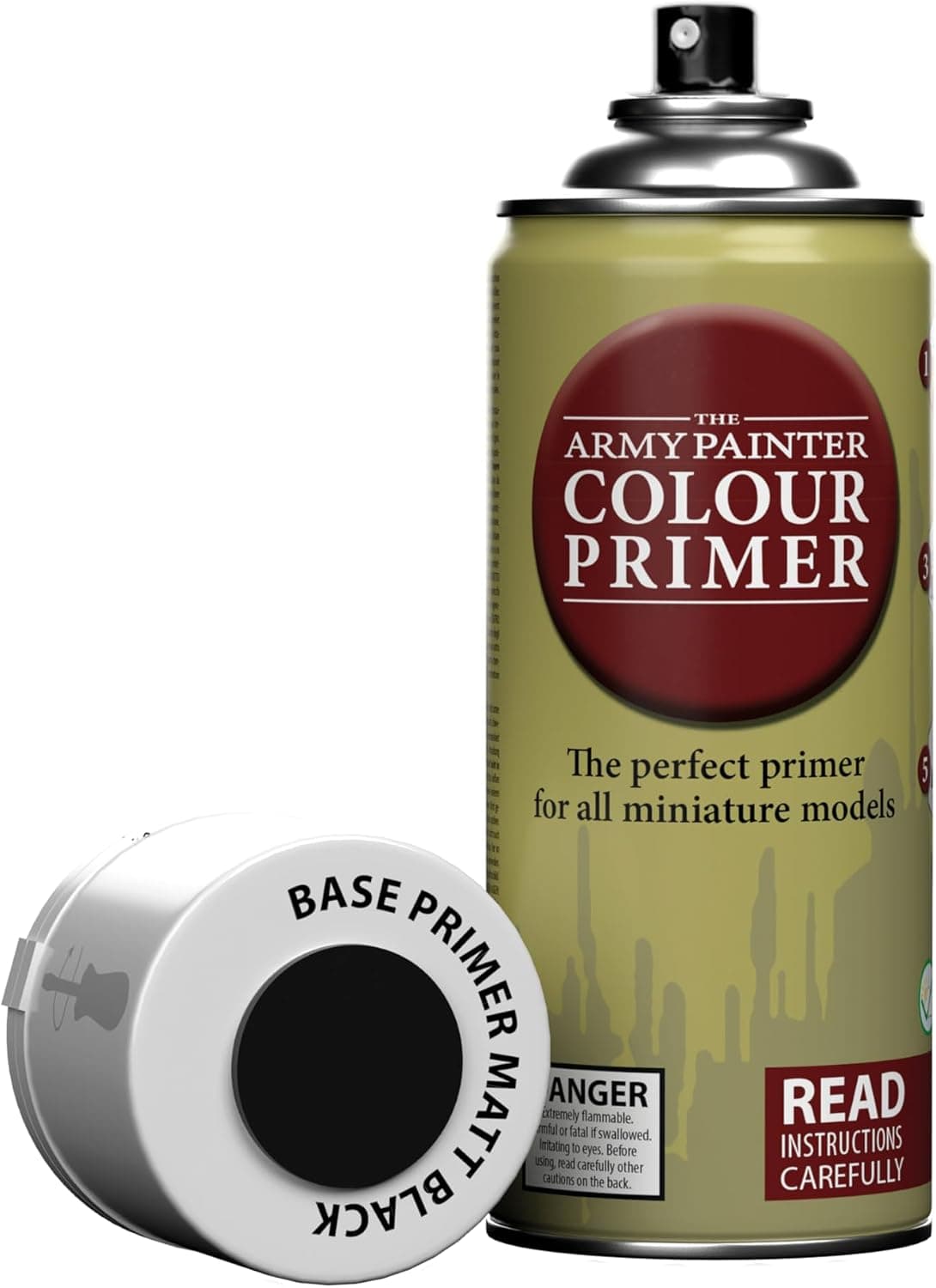
+ Matt black spray primes squads quickly with an even coat
From our guide: Best Primers for Miniatures: Sprays and Brush-On Compared
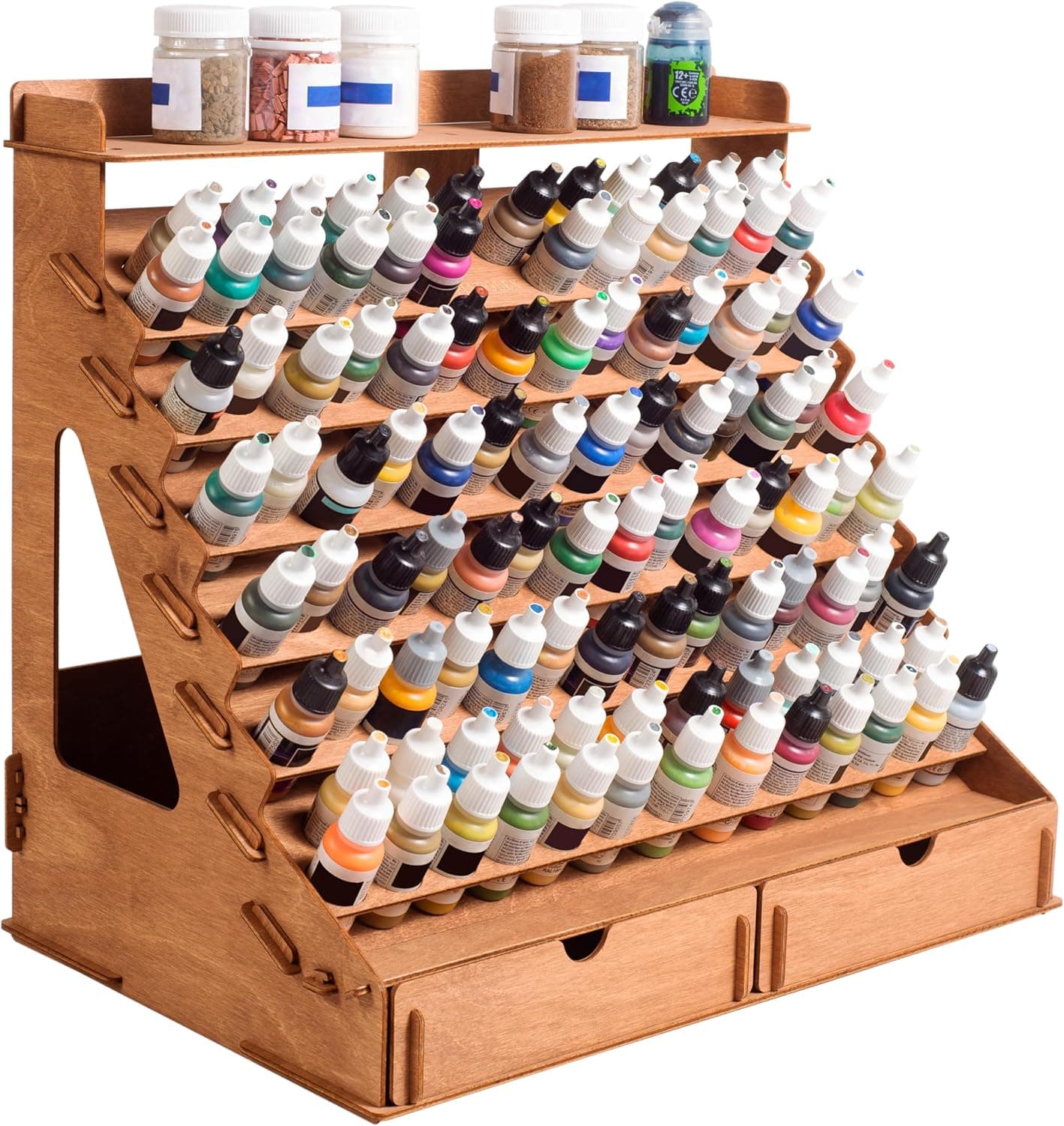
+ 105 holes sized for 17 ml Vallejo style dropper bottles
From our guide: Best Painting Desk Setup for Minis
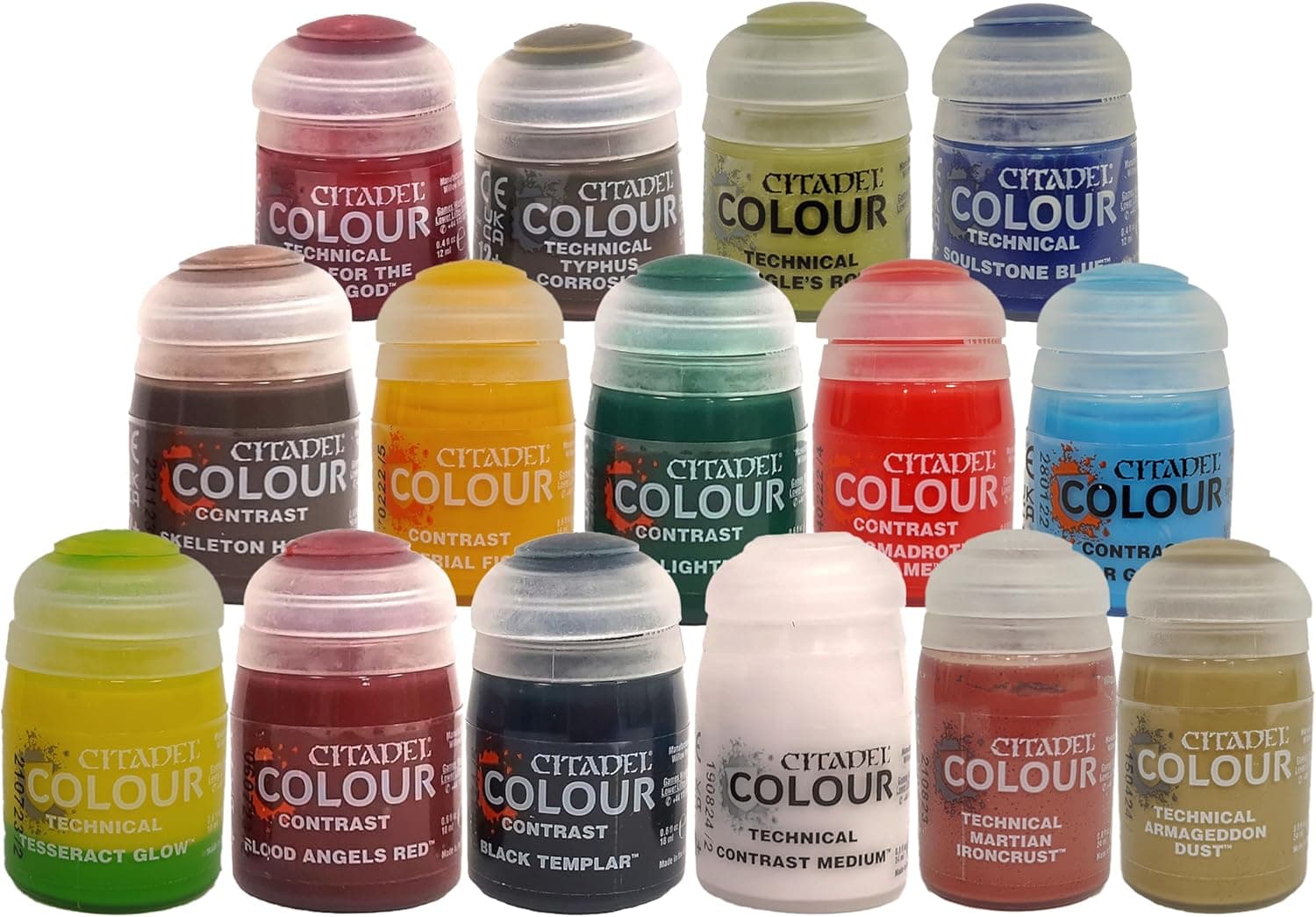
+ Mix of Contrast and Technical paints covers fast bases and texture effects
From our guide: Best Contrast Style Paints for One-Coat Miniature Painting
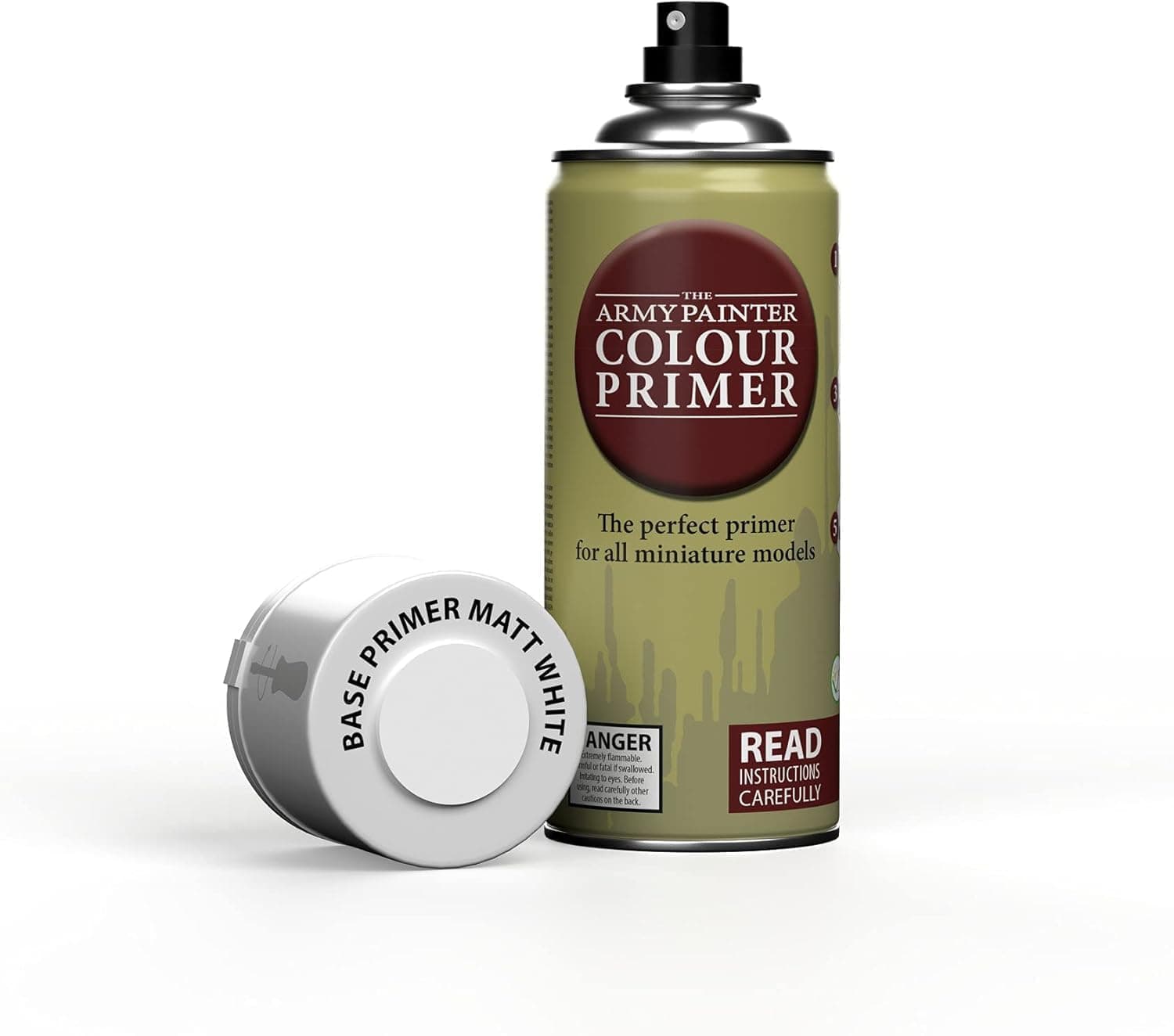
+ White undercoat is ideal for speed paints and bright colors
From our guide: Best Primers for Miniatures: Sprays and Brush-On Compared

Why it works: physics places the light
The technique's appeal is that it answers the hardest question in painting, where does the light go, mechanically. Physics does the placement: the spray can only reaches what a light source in the same position would reach. When you later paint a thinned or translucent color over the surface, the pre-shading glows through, brighter where the undercoat is light and moody where it is dark. Even painting opaquely, the zenithal underlayer works as a map, showing precisely where your highlights belong before you mix them.
Rattle can zenithal priming
Rattle cans are the accessible route. Prime black, let it dry, then hold the model at arm's length and spray grey in short bursts from roughly forty five degrees above, rotating the model so all sides receive it. Finish with a light dusting of white from nearly straight overhead, hitting only the topmost surfaces. The most common error is drowning the shadow work with an over-enthusiastic white pass; you want a gradient, not a repaint. Practice the restraint on a piece of terrain first if the trigger finger feels heavy.
Airbrush and drybrush versions
An airbrush refines the same idea with finer control, letting you aim light from a specific story-driven direction, boost individual focal zones like the face and shoulders, or produce a soft gradient with no spatter texture. Between the two sits the humble drybrush zenithal: over black primer, a large soft brush drybrushes grey then white from above, achieving most of the effect with no spraying at all. Apartment painters and winter painters lean on this version, and on textured models it is almost indistinguishable from the sprayed kind.
What you paint on top decides how much survives
What you paint on top decides how much of the work survives. Contrast-style and speed paints are the natural partners, translucent enough to convert the underlying values straight into shaded color. Classical painters instead use thin glazes of color, letting the monochrome do the tonal work, a workflow related to grisaille painting in fine art. Opaque paint, by contrast, buries the zenithal instantly, so if you plan traditional layering, treat the underlayer only as a guide and expect to re-create its logic in color.
When zenithal priming is worth it
Zenithal priming is not mandatory, and on dark schemes or heavily armored models painted with opaque methods its benefits shrink. But for speed painting systems, for glazing workflows, and for anyone still developing an instinct for light placement, it is a genuine force multiplier. It also makes an excellent diagnostic: photograph the model at the zenithal stage, and the picture shows you the finished lighting your paint should preserve. Few techniques teach as much while demanding as little.
Frequently asked questions
What is zenithal priming? Priming a model dark, then spraying a lighter tone from above at roughly 45 degrees and optionally white from directly overhead, so the model carries a complete light-and-shadow scheme before any colour is applied.
Do I need an airbrush for zenithal priming? No. Rattle cans work well, and a drybrush zenithal, grey then white drybrushed from above over black primer, achieves most of the effect on textured models with no spraying at all.
What paints work best over a zenithal prime? Translucent contrast and speed paints, which convert the underlying values directly into shaded colour, and thin glazes. Opaque layering buries it, so use it only as a guide there.
What is the most common zenithal priming mistake? Drowning the shadows with an over-enthusiastic white pass. You want a gradient hitting only the topmost surfaces, not a repaint.
Popular right now
- The Best Miniature Carrying Cases for TransportBuying guide
- Best Texture Paints for Basing MiniaturesBuying guide
- Best Drybrushes for Miniatures and TerrainBuying guide
- The Best Magnifiers for Miniature PaintingBuying guide
- Best Miniature Paint Sets for Tabletop PaintersBuying guide
- Best Speed Paints for Fast Miniature PaintingBuying guide
Based on the last 28 days of search and visitor data.